Every winter, your nails face a battle no gallery of pretty designs prepares you for – dry indoor heat, glove friction, endless hand-washing, and temperature swings that undo the best manicure in days. The real problem isn’t finding winter nails you like; it’s making them last. The colour palette you choose matters, but so does the dip powder technique and how your nail art design handles the climate inside your office. This is about durability, not just decoration.
For a fuller look at festive manicures that actually hold up, see our winter nail designs feature; if you prefer a clean line that tolerates glove wear, the winter french tip nails guide covers shapes that keep their edges intact longer.
22 Winter Nails That Outlast the Cold, Sorted by Style
These designs look good and stay good — because every one accounts for the reality of dry heat, glove friction, and endless hand washing.
Snowflakes & Frosted Motifs
When winter arrives, a snowflake manicure feels inevitable — but the ones below keep their crisp edges long after the first freeze.
Icy White French with Snowflakes

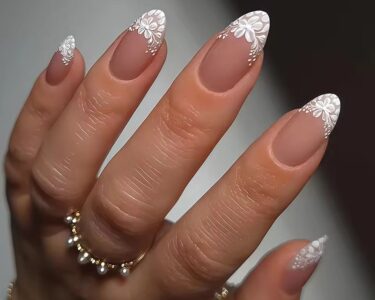
Almond nails in a nude base with solid white tips and delicate hand-painted snowflakes on alternate fingers. The crisp white gel stays bright against a sheer background, and the high-gloss top coat seals the design without thickening the free edge. Snowflake art with gel needs a fully matte top coat under the white paint, otherwise the petals bleed into each other. This is a set that looks as fresh under office lights as it does holding a mug of hot chocolate. If you lean towards a clean seasonal look, try the snowflake nail ideas for more inspiration.
Baby Blue French with Snowflakes

by @lillypalm__
Square-shaped nails featuring a cool baby blue tip over a neutral base, with a glittery French accent and a detailed snowflake on the ring finger. The mix of finishes — glossy, glitter, and matte snowflake — adds depth, but the square silhouette keeps it practical for typing and glove closure. Square edges chip faster in cold because corners catch on sleeves — round the tips slightly with a fine file after your top coat cures. This style fits a casual weekend brunch or a long day at the ski lodge equally well.
Lavender Frost with Gold Snowflakes

by @simlynail
Medium almond nails in a sheer baby pink base topped with light lavender French tips and tiny gold foil snowflakes. The gold shimmers against the cool lavender, creating a frosty, elegant contrast that hides minor tip wear because the metallic draws the eye to the centre. Sheer pink base under lavender tips creates dimension, but if your natural nail is stained, do two thin base coats instead of one thick one. This set pairs well with a grey cashmere sleeve or a simple gold ring.
Forest Green Tips and Snowfall

by @disseynails
Long almond nails with a soft nude pink base and deep forest green French tips accented by white snowflake art and a whisper of gold. The dark green grounds the design, making the snowflakes pop even after a week of hand cream and sanitising. Dark green gel can cure patchy under UV if applied too thick — three whisper-thin layers beat two thick ones. The French structure also means regrowth stays discreet, buying you extra days between fills.
Silver Glitter Tips with Snowy Accents

by @simlynail
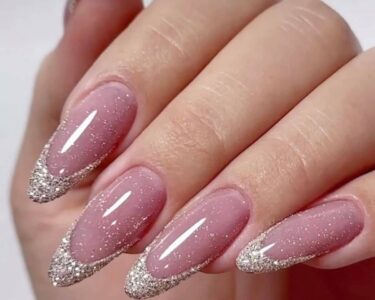
Almond nails in a pale pink base with full-silver glitter tips and white snowflake details dotted across a couple of accent nails. The glitter catches light even when skies are grey, and the pink undertone warms colder skin tones. Glitter polish grabs glove fibres — finish with two layers of slick top coat, curing fully each time, to create a glass-smooth surface. This design works for the woman who wants holiday sparkle without rhinestones that snag.
Nude Base with Snowflake Stripes

Medium almond nails painted in a sheer nude and decorated with silver glitter stripes, white snowflakes, and a full-glitter accent nail. The stripe placement elongates the nail bed, and the snowflake adds a seasonal signature that does not overpower. When placing striping tape for clean lines, remove it while the polish is still wet — waiting too long pulls the design up with the tape. This is the kind of manicure that still looks intentional after a day of typing and glove friction.
Ombré Blue with a Tiny Snowman

Medium almond nails blending baby blue into white in a soft ombré, detailed with hand-painted snowflakes and a 3D snowman built from builder gel on the accent nail. The ombré masks any minor regrowth at the cuticle line, while the snowman adds a cheerful focal point. A 3D snowman made of builder gel must be top-coated on all sides or it yellows under UV light by week two. For a more subtle nod to the season, the minimalist Christmas nails direction works wonders.
Sheer Blush with Snow-Topped Tips

by @lillypalm__
Square medium nails in a sheer blush pink with clean white French tips and delicate snowflake art on two nails. The sheer base keeps the look light and office-appropriate, while the snowflake adds just enough frost to feel seasonal without cutesy overload. Square nails with snowflake art wear best when the white is not too close to the side walls — leave a millimetre gap to avoid chipping at the stress points. A manicure that transitions seamlessly from a boardroom lunch to a candle-lit dinner.
Patterns & Playful Accents
When you want winter nails that feel lively but structured, patterns are the answer. I find that when I choose a polka dot or a single bow over overly complex line art, the manicure simply lasts longer — fewer brush strokes, fewer weak points. These designs mix plaid, dots, bows, and swirls, all with the staying power that cold weather demands.
Pink Base with Black Plaid Accents

Almond-shaped nails painted in pale pink, with black French tips on three fingers and a full plaid pattern on the accent nail. A tiny black bow sits on the ring finger, adding a polished, festive touch. The glossy gel finish locks the entire design under a glassy seal that resists glove lint. Before you paint black over pale pink, seal the base with a no-wipe top coat to stop any colour bleed. This look plays well with cream knit sweaters and gold rings, and the varied pattern placement disguises minor wear. For coordinated holiday looks, the December nail ideas are worth a scroll.
Teal Swirls with a Golden Glint

Long almond nails with a nude base and teal glitter swirls outlined by fine gold lines. Some nails are fully coated in shimmering teal, while others feature the art, creating a balanced, refined effect. The movement in the swirls hides any tiny cracks that might start at the cuticle as the nail expands in the warmth. Metallic gold lines painted over uncured top coat sink in and stay without peeling — never let the layer fully dry first. This design feels expensive and looks even better against a soft wool sleeve.
Crimson Bow with Pearl Detail

by @disseynails
Long almond nails combining deep glittery red on two fingers and a nude base with red French accents on the others. The star is the ring finger: a painted red bow crowned with a single white pearl. The gloss is mirror-like, bouncing light and making the pearl pop. Pearls on nails won’t stay glued unless you cure a drop of builder gel under them — fabric glue lifts the second you wash your hands. This is a manicure for a Christmas dinner or a New Year toast, but build the pearl seating properly and it lasts into January.
Minimal Polka Dots in Deep Red

Medium almond nails in a sheer nude base dotted with tiny dark red circles, sparse and precise. The dots are the only ornament, which keeps the manicure quiet enough for the office but festive enough for the season. Dotting tools give cleaner circles than a brush — dip the larger end into polish and touch lightly, no pressure. The sheer background also helps disguise cuticle flakiness that dry indoor heat amplifies, making this a clever pick for winter.
Black Bow with Silver French Tips

by @gels.byffi
Square medium nails with a transparent nude base, silver glitter French tips, and a single black bow painted on the accent nail. The contrast between the frosty silver and the sharp black creates a graphic, modern silhouette. If you’re wearing rings, keep your top coat ultra-thin on the sides or the ring will dent the polish within hours. This set leans fashion-forward rather than sweet, and the square shape holds up well to constant hand washing.
Bronze Metallic and Blue Dot Tips

Almond medium nails featuring a mix of metallic bronze and iridescent light blue, each with dark chocolate brown polka dots and thin painted tips. The warmer bronze anchors the cool blue, making the combination unexpected but cohesive. Iridescent polish separates in the bottle when cold — roll it between your palms for thirty seconds, never shake, or you’ll trap air bubbles. A style that feels polished and seasonal without screaming “holiday nails,” perfectly suited to someone who keeps her wardrobe in soft neutrals and denim.
Burgundy Tips with Silver Polka Dots

Long almond nails with a sheer pink base and deep burgundy French tips dotted in silver. The dots break up the dark colour and create a rhythmic pattern that draws the eye along the nail, making the length appear even more elegant. Silver dots on a dark base can smudge if you re-dip the tool too often — wipe the dotter clean after every two dots, not after every nail. This is a festive French that still feels classic, and it flatters almost every skin tone.
Rich Solid Shades That Last
I reach for one of these solids every time the forecast drops below freezing — less can go wrong, and the effect is quietly confident. A single, saturated colour hides imperfections, resists chipping, and matches everything in your cold-weather wardrobe.
A Single Coat of Dark Chocolate

Medium almond nails painted in a deep chocolate brown with a high-gloss gel finish. The colour is solid and opaque, with no shimmer or glitter, relying purely on depth. Shape matters more than length with a dark solid like this — almond elongates the hand without adding bulk. A chocolate brown like this hides tip wear better than black, and one thin gel layer is all you need to avoid bulkiness. It complements every neutral sweater and feels unexpectedly fresh after weeks of reds and greens. If brown is your neutral of choice, the brown nail designs guide has more to explore.
Deep Metallic Blue in a Single Coat

Medium almond nails in a shimmering deep blue that shifts from navy to sapphire as the light moves. The metallic finish adds dimension without glitter particles, so the surface stays smooth and glove-proof. Metallics show every ridge — apply a ridge-filling base coat first, even if you think your nails are smooth. This colour works as a neutral in winter, pairing with black coats, camel scarves, and silver jewellery alike.
Navy Gel That Stays Put

Long almond nails in a glossy, almost-black navy. The pigment is dense enough that two thin coats create full coverage, and the clean, unadorned surface reflects light well. Long almond nails in dark navy need a cap over the free edge — paint the tip horizontally to seal, or the colour wears off the end within days. This is a power-colour manicure for the woman who works through winter without fussing over nail art.
Ruby Red with a Soft Gleam



e.l.f. Halo Glow Liquid Filter
A glow-enhancing complexion booster for soft-focus makeup looks.
Check Price on AmazonAs an Amazon Associate, Lady Lana Beauty earns from qualifying purchases.
Medium almond nails in a shimmering ruby red that glints subtly rather than sparkles. The gel formula gives a plush, candy-apple depth. Red gel can stain the nail plate if you skip a base coat — the pigment seeps into the keratin and leaves a pink tint that takes months to grow out. This classic festive hue carries you from December celebrations right through to Valentine’s Day if you maintain the regrowth. For more classic glamour, the old money nail approach often starts with a red exactly like this.
Shimmer, Glitter & Dimensional Shine
For those moments when winter nails need a little more magic — rhinestones, star charms, and glitter that refuse to quit.
Sky Blue Ombré with Star Charms

Long almond nails transitioning from a milky white at the cuticle to soft sky blue at the tip, dotted with tiny silver star charms and clear rhinestones. The ombré creates a floating effect, while the charms add a dreamy, celestial mood. Star charms can snag on wool — file any sharp edges with a glass file before sealing with gel top coat. This set fits a winter wedding or any occasion where the light hits your hands a lot.
Cable Knit Texture and Crystal Stars

Extra-long stiletto nails in royal blue and white, featuring a mix of French tips, hand-puffy cable knit texture, snowflake art, and filled starbursts, all accented with clear rhinestones. It is maximalist and deliberately theatrical. Extra-long stilettos break more in cold because the acrylic contracts — warm them in your hands before stepping outside to reduce sudden cracking. This is a look for the woman who sees her nails as the main accessory at every holiday gathering.
Burgundy and Gold Glitter French

by @thehotblend
Long almond nails with a nude base and a rich burgundy French tip, the smile line edged in fine gold glitter. The glitter extends slightly into the nude, creating a soft, festive gradient. Gold glitter tips make regrowth less obvious — the line where your natural nail meets the extension blurs under the sparkle. This design celebrates the season without a single snowflake, and the warm burgundy-gold pairing looks luxurious against dark knits and candlelight.
Why Your Manicure Won’t Stick When the Heat Comes On
The real culprit is indoor heat: It isn’t the icy wind outdoors that makes gel base coat fail — it’s the heating indoors, pulling moisture out of your nail plate until the surface turns brittle and repels product instead of bonding with it. When you step from a frosty commute straight into a blasting office or living room, that rapid shift dries the keratin almost instantly.
Dehydrate twice, not once: Most at‑home women wipe with acetone and call it done. In winter, natural oils thicken in the cold and block adhesion more stubbornly. After the acetone pass, use a dedicated pH bonder — something with a high‑evaporation solvent — to strip the last film of oil. I’d argue this extra step matters more than any base coat upgrade, because it gives the product a genuinely clean canvas.
Your LED lamp works against you when the room drops below 68°F: Low ambient temperature slows the cure of the underlayer, leaving it weak even when the surface feels hard. Nail techs in cold climates routinely flash‑cure the base for ten seconds, remove the hand, then run the full cycle. That brief pause lets the layer settle without a half‑set middle.
Check your primer bottle: Acid‑based primers are too aggressive on winter‑dry keratin, causing microscopic cracks that lift a few days later. Swap to a non‑acid primer with silane — it creates a flexible bond that moves with your nail plate when your fingers contract in the cold. You’ll see fewer corner lifts, especially under darker winter nail colours that show every flaw.
How to Outsmart the Salon’s Holiday Price Surge
Book two days before peak, not on it: Dip powder and PolyGel need a 48‑hour window to chemically settle. If you get a fill the day before you host, your nails haven’t fully bonded, and all that gift‑unwrapping and hot‑cocoa handling will test weak underlayers. Slot the appointment for Wednesday before a Saturday party and you skip the price jump too.
The hidden charge isn’t the art — it’s the fast‑dry top coat: Salons often push a quicker‑curing gloss to turn over the chair faster, then fold that cost into “holiday pricing”. Bring your own UV‑cured gloss top coat and politely ask them to use it. You save that line item and keep a flexible, December‑proof finish that doesn’t chip when you’re elbow‑deep in tin foil.
Negotiate a base‑only fill instead of a full new set: If your extension is firmly attached but overgrown, ask for a base fill and file repaint. It costs roughly half and spares your natural nail from double‑filing damage. That hidden damage shows up later as white patches under dark shades, and no amount of repair can hide it under sheer winter nail art designs.
Ask one question before you book: “Do we do a hot oil cuticle treatment before the soak‑off?” If the answer is no, find another chair. Cold‑weather removal without oil pre‑treatment pulls moisture from the nail plate, leaving your naturals cracked beneath the fresh set. The treatment takes five minutes and is the single best defense your holiday manicure can have.
Your Nail Shape Is Sabotaging Your Winter Routine
Stiletto points snag on thermal expansion, not just wool: When you step from cold air into a heated room, wool fibres fluff microscopically as they warm, and a sharp tip catches in those lifted threads. Rounded coffin or squoval tips glide right past, so you stop fighting your coat sleeves every time you reach for a scarf.
Square shapes concentrate winter stress: As your hands warm up, the nail plate expands slightly. Square corners become stress risers that crack when you pull on ski gloves or button a heavy cardigan. Almond and oval silhouettes distribute that expansion evenly across the curve — a simple physics win that reduces snapping by a measurable margin, especially under shorter lengths. Most guides recommend a shape based on aesthetics. I’d argue shape matters more than length, because the right silhouette handles daily flex without chipping.
Almond elongates short fingers; coffin adds width to narrow nail beds: If your fingers look stubby in winter’s hollow light, almond extends the eye line and hides regrowth longer. On very slender nail beds, coffin’s parallel sides give the illusion of width, but you must reinforce the sidewalls with gel, because the straight edge wants to lift under glove pressure.
The length sweet spot ties to your cuticle contraction: If you see a visible shadow gap at the nail base within a week, your nail plate is flexing more than the enhancement. Until the mud‑season thaw, go no more than ten percent beyond the fingertip and stick to oval or squoval. Throw out files below 180 grit — a glass file with ultra‑fine grain seals the keratin edge so hand cream doesn’t wick up and peel your late‑autumn colour off by day five.
Winter Nails Recovery — What Your Long‑Wear Top Coat Is Really Doing
Extreme‑wear formulas stack invisible damage: Those salon‑grade top coats that promise two‑week hold get their toughness from nitrocellulose hardeners. The film becomes so rigid that every accidental knock — stuffing a heavy handbag, wrestling a child’s car seat — transmits straight to the natural nail bed, causing tiny bruises that later turn into persistent white spots.
A winter top coat needs camphor‑derived plasticiser: Eighty percent of drugstore bottles skip this ingredient. A high percentage of camphor‑derived plasticiser keeps the film flexible enough to move with your nail plate when temperatures swing forty degrees in an afternoon. Look for it on the label, or choose an UV gel top coat that lists it in the first five ingredients.
Mid‑season nail fasting isn’t a myth — it’s a timing necessity: You don’t need a month off polish. Three days with a lanolin‑based healing balm and a silk wrap on vulnerable tips, right after dip removal, resets dehydration‑induced peeling more effectively than any hardening base coat. This pause gives the keratin time to reabsorb natural oils lost to indoor heating.
Never scrub acetone‑soaked cotton across the nail surface: In winter, softened keratin scratches off in sheets when you rub to speed up removal. The non‑negotiable method is a fifteen‑minute foil wrap, oiled first, with the soaked cotton placed away from the cuticle line. If you love switching to fresh February shades, this single habit keeps your nail plate from thinning beyond repair.
Your 10-Item Winter Nails Emergency Kit (Printable Checklist)
Cuticle oil with lanolin, not just jojoba: Swap your usual oil for one that lists lanolin near the top.
Jojoba is fine for mild weather, but central heating strips the nail fold of its natural grease so aggressively that only a heavier fat can keep up. Lanolin mimicks the waxy oil your skin stops producing when the air goes dry, staying put through hand-washing marathons. Press a drop into the borderline between nail and skin before bed and you’ll wake up without that white flake ring.
One tempered glass file (180-grit minimum): Retire the metal file you used all summer.
Metal files tear keratin when the nail is already brittle from dehydration; a glass file seals the free edge smoothly so moisture can’t wick up. Its grit never wears down, meaning every stroke in November is as sharp and clean as in March. Keep one in your bag and one in your glove compartment — the static-prone air in heated cars makes a clean seal non-negotiable.
Nail strengthener with hydrolyzed wheat protein and calcium, not formaldehyde: Read the front label and walk past anything ending in -aldehyde.
Formaldehyde hardens by cross-linking the nail plate until it snaps under glove friction. Hydrolyzed wheat protein feeds flexibility into the keratin, and calcium fills microscopic gaps that cold weather opens up. You can wear it under your base coat as a double-bond layer that moves with the nail instead of cracking against it.
Pre-cut silk wraps and fast-bond resin: Stash a set where you’d keep a spare charger.
A split corner can be patched in three minutes without a lamp — the silk distributes tension across the crack so it won’t run further when you type. Resin cures under finger pressure alone, which means you can fix a break in the office bathroom before a client dinner. Paint the patch with your top coat and it disappears under colour.
Travel hand cream with urea (minimum 5%): Find a tube that says urea and nothing below 5 percent.
Urea is the only humectant strong enough to pull moisture through winter-dry nail walls, working from inside the skin upwards. Apply it after every wash and before gloves, focusing on the nail bed. The slight tackiness you feel at first is the active ingredient drawing water — give it thirty seconds and it sinks in completely.
FAQ
Can I just paint over my chipped gel polish for a party tonight?
Yes — but seal the chipped edge with a micro-swipe of clear nail resin first. If oxygen reaches the gel layer, fresh lacquer can bubble within a few hours. Use a quick-dry top coat formulated for mixed systems to lock everything down flat.
Why do my nails smell weird after wearing press-ons for a week in winter?
That smell is moisture trapped between the press-on and your nail plate, mixed with hand cream residues. In winter, heavier creams and less breathability create a slightly anaerobic environment. Blot your natural nail with alcohol for a full thirty seconds before application — not a quick swipe — and let it evaporate completely before pressing on.
Does cold weather make dip powder crack more easily, or is it the application?
Both — but the cold amplifies every tiny prep slip. Dip powder activator cures slowly in low temperatures, and if the layer bond doesn’t fully bridge before you file, invisible micro-cracks appear later. Warm the activator against your body for five minutes before use in an unheated room, every single time.
Are the UV lamps used for winter gel manicures worse for my skin when it’s already dry?
The UV exposure is negligible, but your skin barrier is already thinned from cold air and heating, making it more reactive to uncured gel residue. Apply a mineral sunscreen stick just to the skin around your nails before the lamp — not just to the hands — and never skip cleaning off the inhibition layer thoroughly.
Should I skip base coat to make my winter manicure last longer?
No. Skipping base coat lets pigment anchor directly into your nail plate, and removal will tear off layers of keratin — especially when the nail is already dehydrated. In winter, use a base coat with a high-grip resin designed for cold adhesion; it bridges between your dry nail and the colour without damaging the surface.
How do I hide a broken nail without cutting all of them down?
Repair the break with a silk wrap and a dip powder overlay tinted to your base colour, then paint only that nail as a deliberate accent — metallics, a tiny frost pattern, or a solid foil. No one will question a broken middle finger when it’s been turned into a snowflake accent that looks entirely intentional.
What nail shape actually survives glove friction and keyboard tapping through winter?
Almond and oval tips glide past coat cuffs without snagging and distribute thermal expansion evenly around the curve. If you prefer a squarer silhouette, soften the corners into a squoval — hard squares snap at the stress risers when your nail contracts in dry air. Coffin nails can work if you file the tip edge slightly rounded and keep the length within about ten percent beyond your fingertip, so the natural nail bed carries the load. Sharp stilettos are the first to catch on wool fibres and tear beneath a glove, so save those for mud season.