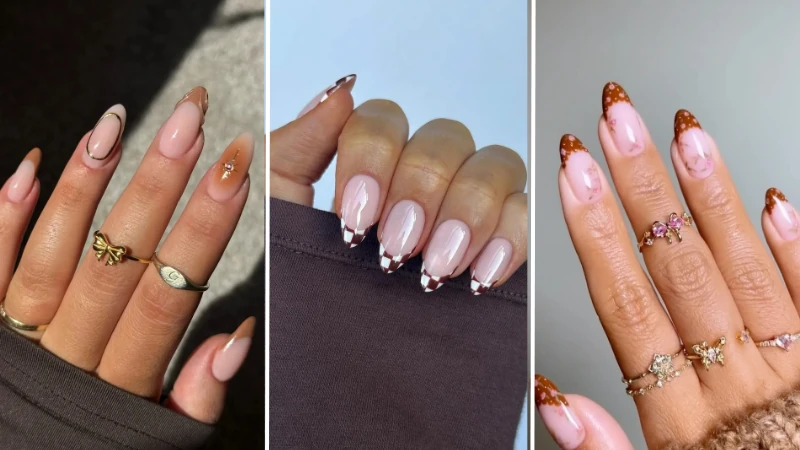
Fall French Nails look striking in the salon photos, but the real challenge begins the next week: central heating dries out the gel, dark tips show every tiny chip, and mid-autumn activities like pumpkin carving or roasting pan scrubbing test the manicure’s staying power. Most guides skip the practical wear-and-tear that US women face daily — how to make those deep plum or forest green tips last through two weeks without looking bulky or lifting at the cuticle. Almond Nails amplify the issue because the pointed tip catches more wear, so the base and colour need extra care.
If you’re working with a shorter nail bed, the short fall nails guide shows how to keep it elegant. And for those considering a solid autumn shade instead of French, the collection of brown nails ideas might give you a starting point.
25 Fall French Nails for Every Autumn Mood
These 25 fall French designs start at the simplest clean line and build up to patterns, prints, and tiny works of art. You’ll find the right amount of detail for your days — whether that’s a clear desk or a full calendar.
Minimal French Tips in Autumn Solids
A thin line always reads more modern than a thick one — my rule is 1.5 millimetres or less. These five designs keep decoration to zero or a whisper of gold, letting the autumn shade do all the talking.
The Dark Chocolate Clean-Line French

by @thehotblend
An almond medium nail with a sheer nude base and a deep chocolate brown tip. The line is classic — no shimmer, no pattern, just the richness of the colour against bare-looking beds. This is the French tip that works with every sweater you own, the dark brown shade feeling autumnal without being gothic. Request a rubberised base coat instead of a ridge-filler — it grabs the natural nail harder and prevents that autumn micro-lifting around the cuticles. If you do it at home, one thin coat of nude, flash-cure, then paint the tip with a liner brush and cure again before the top coat.
The Stiletto Deep Brown with a Hair of Gold

by @thehotblend
A long stiletto shape with a nude base and a deep chocolate brown tip; a single thin gold line traces the curve where the nude meets the brown. Stiletto can feel aggressive, but the gold line softens the angle and pulls the eye along the finger. The gel technique is critical here — the structure gel underneath must build enough apex near the free edge so the point doesn’t snap during fall weekends. Use a soak-off builder gel in thin layers, curing each for 60 seconds, rather than a hard gel that files aggressively. The gold is best done with a chrome powder dabbed on a no-wipe top coat line — it stays crisp and doesn’t add thickness.
The Burgundy V-Cut Edge

Almond medium nails with a mix of solid nude, solid deep burgundy, and French tips where the burgundy sits in a V-shaped negative space. The design plays with opacity without adding glitter or gems. The burgundy is deep enough to read as autumn but the negative space keeps the nail from looking heavy. For a salon version, the tech masks off the V with a thin strip of nail tape before applying the colour. Two thin layers of top coat over the V joint prevent it from catching on wool knits and lifting early. The bare nail bed looks intentional — polished but not trying hard. At home, use a nail form sticker to get that sharp line.
Long Almond Chocolate and Molten Gold Waves

On long almond nails, a sheer nude base holds dark chocolate brown French tips; two accent nails have wavy gold line art drawn on top. The lines are irregular and organic, like a thread of gold caught in autumn light. This design adds movement without bulk. Long almond shapes need a balanced sidewall structure, or the gold line can visually warp. If you notice the gold starting to wear at the free edge, seal it with a thin re-coat of no-wipe top coat and cure for 30 seconds — it pushes the wear out another four days. The gold powder should be burnished into a tacky layer rather than painted on, so it stays metallic and doesn’t oxidise in hand sanitiser.
Thin Tips in Every Shade of Autumn

Medium almond nails with a sheer nude base and whisper-thin French tips, each in a different earthy tone: dark brown, taupe, olive green, emerald green — a fall palette of leaf colours. The variation across the hand creates a soft gradient effect, almost like the nails picked up the season’s own shifts. The micro-thin line keeps the hand elegant and avoids the colour-block heaviness thicker tips bring. Use a 5 mm liner brush and barely touch the polish; one stroke per nail, never going back over, or the line thickens twice as much as you think. A flexible top coat lets the tip expand with the natural nail in dry office air, so less cracking at the edge.
Dots, Checks & Abstract Edge
When a solid line feels too quiet, these seven fall French designs break the tip into dots, checks, or sweeping abstract curves — still unmistakably French, still fit for every day.
Gradient Brown Dots on Almond Medium

Almond medium nails with a nude base and French tips made from clusters of brown polka dots — some dark chocolate, some milk chocolate, some cream — arranged in a soft gradient. The dots are painted individually, not stamped, which gives each a hand-finished look. The dotting motion is simple enough that a careful home mani can match this with a dotter tool in three sizes. Load the dotter with a tiny bead of gel; any larger and the dot flattens into a blob that blends with its neighbour. The key to longevity is a tack-free top coat that doesn’t drag the dots during application. This design grows out gently because the dot pattern doesn’t have a hard edge you watch for regrowth.
Abstract Earth-Tone Tip Sweeps

by @bycheznails
Almond medium nails with a sheer pink base and abstract French tips in olive green, burnt orange, and forest green. The colours sweep across the free edge in broad, irregular bands that leave areas of bare nail between them — a negative-space effect that looks intentional rather than patchy. This style works with any three fall nail colours you already own. Stripe the colours on a makeup sponge and dab onto the tip instead of brushing; it gives a softer edge and keeps the gel layer thin enough to avoid a bulky arch. Because the bands stop before the apex, the shape remains elegant and the nail bed doesn’t look shortened. A matte top coat on one accent nail would shift the texture for evenings.
Olive Tips with Tiny White Spots

Medium almond nails, sheer pink base, and olive green French tips dotted with crisp white polka dots. The olive reads as a neutral, so the white lifts it into a detail you notice on your second glance. The dots are spaced evenly, which gives the manicure a hand-drawn precision that feels tailored. Paint the olive tip first and cure it fully; then dot the white on top — if you try to dot while the green is wet, the colours muddy. A glossy top coat deepens the olive to a rich, forest-floor shade that pairs well with oatmeal knits. This design chips less than a solid tip because the dots create tiny interruptions that stop a crack from travelling across the whole edge.
Mocha Dots on a Nude Base

Almond medium nails, classic nude base, and French tips that are mocha brown with darker brown polka dots. The monochromatic palette keeps the hand looking long and the nail plate slim, while the dotted tip adds the same sort of texture as a tweed blazer. The mocha shade is one of the easiest fall colors to transition from office to weekend. A protein bonder under the base coat stops the mocha gel from peeling in sheets when your hands are in and out of dishwater for autumn baking cleanup. For a faster at-home version, use a brown jelly polish for the tip and a stamping plate for the dots — it cuts the time by half and the stamp lines stay sharper than a shaking hand.
Long Almonds, Double-Dot French

Long almond nails with a nude base and French tips in chocolate brown dotted with bright white spots. The longer nail shape gives extra canvas for a second row of smaller dots spaced deliberately between the first. This double-dot technique makes the tip feel filled but not heavy, so the almond point doesn’t look overpowered. When applying the top coat over double dots, float the brush rather than pressing — pressing flattens the raised dot texture and smears the white into the brown. A flexible gel base underneath helps the extended length survive jacket pockets and knitting without a mid-tip crack. The nude base is sheer enough that any regrowth at the cuticle blends rather than shouts.
Square Espresso Tips, White Dot Contrast

Medium square nails with a nude base and espresso brown French tips dotted with white. The square shape makes the dotted tip read as a crisp, flat edge — a structured look that also suits shorter nail lengths. Because square corners can snag, the dots here are placed slightly inset from the free edge. File the square corners with a soft buffer after top coat to round the very edge by a fraction of a millimetre; it prevents catching without changing the shape. The high contrast of white on espresso means any tip wear shows less dramatically than a solid espresso tip would. A hand cream with lanolin massaged into the sidewalls every night keeps the gel flexible through October’s first cold snaps.
Checked French Tips for the Autumn Table

Medium almond nails, nude base, and French tips painted in a brown and white checkered pattern. The check is precise, with thin crisscrossing lines that evoke a picnic blanket more than a race flag — warm and deliberate. Doing this with gel at home requires a striping brush and patience, but you can cheat with a fine-tip nail art pen over a cured white tip. Tape off the tip line with nail form strips before painting the checks, so the pattern doesn’t bleed onto the nude bed. A glossy finish makes the chocolate squares look almost edible, while a matte coat gives them a ceramic mosaic feel. The checkered pattern masks any tiny chip marks because the eye expects the brown-white interruption anyway.
Tortoiseshell, Leopard & Animal Print Tips
I reach for tortoiseshell before leopard in autumn — the amber and brown specks feel leaf-litter soft against knits. These six designs borrow texture from the animal kingdom, all sitting on a nude bed so the print doesn’t weigh down the nail.
Almond Animal Spots on Sheer Nude

Almond medium nails with a sheer nude base and French tips painted in chocolate brown and tan animal-print spots. The spots are small and irregular, clustered at the free edge and fading up toward the bed. This isn’t a full-nail leopard; it’s a French adaptation that keeps negative space working for you during grow-out. Use a dotting tool to place the brown background spots first, cure, then add tan centres — if you reverse the order, the tan bleeds into the chocolate and you lose the contrast. A thin gold ring complements the warm undertones. The sheer bed makes the manicure feel light enough for everyday, even with the pattern. The gel stays flexible if you avoid thick colour coats.
Tortoiseshell French and Golden Waves

Almond medium nails, nude base, and tortoiseshell-patterned tips in brown, black, and amber. A wavy gold line separates the shell pattern from the nude bed, adding a clean visual break that makes the design feel deliberate. Tortoiseshell done with gel requires layering sheer amber and dark brown in partly cured spots, then moving the colour around with a thin brush. Work on two nails at a time; tortoiseshell gel starts to set mid-swipe if you do more, and that gives you hard edges instead of the organic blurred look. The gold line covers any jagged edge between the pattern and the nude. A top coat with UV-absorbent filters keeps the amber from fading under car sun-lights.
Autumn Tortoiseshell with a White Accent Tip

A mix of French tips on almond medium nails: some are nude-and-white with a tortoiseshell overlay, others are solid tortoiseshell pieces. The variation across the hand breaks the pattern just enough to stay interesting. The outdoor autumn setting hints at how the colours pick up fallen leaves. The white accent under the tortoiseshell brightens the overall look, so you don’t lose the French structure. A pre-soak oiling routine before gel removal will stop the dark shell pigments from staining your nail bed — apply a drop of jojoba oil to each nail and let it sit under a foil wrap for the first 5 minutes of acetone soaking. A thin structure gel as the base balances the multi-layer tip without adding thickness.
Low-Contrast Leopard French

by @_nailsby
Almond medium nails, nude base, and French tips in espresso brown with black leopard spots. The contrast is kept deliberately low — the spots are soft, almost smudged, which reads more as texture than an in-your-face print. This is the leopard for someone who wants the detail without the drama. A sheer pink overlay across the whole nail softens the black spots further and makes them look like they’re floating inside the gel. If your salon uses a thicker black gel for the spots, ask them to scrape the brush almost dry — thick black gel takes longer to cure fully and can develop tiny bubbles that look like dust in the final look. The almond shape lifts the print away from any Halloween-costume association.
Long Almond Leather Print and a Tiny Stone

by @nailsby_gxx
Long almond nails with a nude base and dark brown French tips patterned with an animal print that reads like embossed leather. A few accent nails carry a small flat-back rhinestone embedded just at the tip’s highest point. The stone is minimal — a single point of light that shifts when you move your hand. Encapsulate the stone with a thin layer of builder gel, not just top coat; top coat alone will lift around the stone within four days and catch every strand of wool. The dark brown pattern is hand-painted with a fine brush; ask your tech to use a semi-opaque brown to create depth without full coverage. The long almond shape gives the leather texture room to stretch; on a shorter nail it would crowd.
Black and Bronze Leopard on Long Almonds

by @gieos.room
Long almond nails with a sheer light pink base and French tips in black and metallic bronze leopard print. The bronze replaces the usual tan, giving the print a slightly luxe, evening-ready lift. The black spots are distinct but irregular, with the bronze gleaming through the gaps. A gold ring on the hand pulls the metallic finish together. Chrome powders like metallic bronze seal best with a no-wipe top coat; if you use a regular wipe top coat, the shine dulls by about thirty percent after the first hand wash. Keep a travel-sized nail oil in your bag — the bronze finish shows micro-scratches from daily wear more than a solid colour, and cuticle oil fills those micro-lines optically for a quick refresh.
Floral, Goldwork & Decal Details
For days when the French tip turns into a tiny canvas: these seven designs layer in flowers, goldwork, a bear, and a ballet slipper — always with the classic nude bed and defined tip line.
The Teddy Bear Accent French

Almond medium nails, sheer light pink base, dark chocolate brown French tips, and one accent nail with a small brown teddy bear decal. The bear is placed near the cuticle, leaving the tip free so the design reads as a refined manicure with a smile, not a children’s sticker sheet. The rest of the hand stays bare — glossy, clean tips. Seal decals with a layer of top coat that wraps the free edge; if the decal sits on the surface without an edge seal, hand washing loosens it by day five. The dark brown tips are a single pigment gel, applied with a slim brush to keep the line thin. This is a weekend-friendly design that makes a plain waffle-knit sleeve look considered without trying too hard.
Ballet Slipper Pink and Burgundy French

by @hgnailsco


e.l.f. Halo Glow Liquid Filter
A glow-enhancing complexion booster for soft-focus makeup looks.
Check Price on AmazonAs an Amazon Associate, Lady Lana Beauty earns from qualifying purchases.
A playful party set on almond medium nails: nude base, burgundy French tips, polka dots, swirls, and one accent nail featuring a ballet slipper motif and tiny rhinestones. The palette is burgundy, white, and a pale blue for the shoe, which keeps the whole hand delicate despite the detail. The swirls and dots are hand-painted; ask your tech to use a striping brush for the swirls and a dotting tool for the dots to avoid thickness. Rhinestones placed near the tip catch on lace and cashmere — position them slightly lower than the tip’s apex so they sit in the curve of your natural nail plate instead of jutting out. A blue-light filtering top coat keeps the pale blue from yellowing under indoor office lights.
Warm Ombre and Gold Line Clean French

by @nailsby_gxx
Long almond nails with a nude base, a soft ombre mocha-brown French tip, a delicate gold line, and one small rhinestone accent. The ombre fades from brown at the free edge into the nude at mid-nail — the gentlest version of a French you can get. The gold line runs along the ombre transition, defining the shape without shouting. An engraved ring and a brown sleeve add to the warm, easy feel. For the ombre, dab the brown gel onto a sponge and tap it lightly onto the nail tip; two thin tapped layers control the colour better than one thick one. The rhinestone is tiny and tucked just below the gold line; a brush of matte top coat over the stone alone makes it look like an embedded raw diamond rather than a plastic gem.
Bright Red French with Tiny Daisies

by @lillypalm__
Short square nails with a nude pink base and vibrant red French tips, each accented with a small white and yellow daisy. The red is a cheerful contrast to typical fall browns — it picks up the colour of late summer geraniums and carries it into sweater season. The daisies are painted with a few quick dotting motions, so they’re a realistic at-home project if you have a steady hand. Red gel stains more than any other colour, so apply a tinted stain-blocking base coat before the nude layer — it’s the difference between a quick soak-off and three days of orange nail beds. Short square nails suit this design because the straight tip line gives a flat edge to seat the daisy without crowding the nail bed.
White French Tips as a Floral Canvas

Almond medium nails with a nude-pink base and white French tips hand-painted with small brown flowers. The white tips serve as a blank page for the fall florals, which makes the hand feel dressed for a garden party. The brown petals are made with three tiny strokes per flower, no larger than a rice grain. Hand-painted florals on white gel need a fully cured white base; any residual tackiness from under-cured white gel will pull the brown pigment when you paint the petals, blurring the lines into a muddy mess. Keep the design to two or three accent nails; the rest stay plain white French for a balanced, wearable finish. A glossy top coat softens all the edges.
Speckled Chocolate and Pink Petal Details

Almond medium nails, sheer baby pink base, and chocolate brown French tips with a speckled finish. A subtle pink floral accent peeks through at the side of some nails, barely there unless you look closely. The speckled effect is achieved by flicking a small brush of brown gel over the tip, creating a terrazzo-like texture. Flick the brush from about 15 centimetres above the nail — too close and you get puddles, not speckles. The pink floral accents are painted after curing the speckled layer, using a dot of pink and two tiny green leaf strokes. This design feels soft and feminine; the brown keeps it grounded in fall, and the sheer pink bed means regrowth at the cuticle is invisible for the first ten days.
Short Square Espresso, Small Floral French

by @_nailsby
Short square nails with a nude base, espresso brown French tips, and small brown flower decals near the cuticle line. The decals are pre-made, so this design takes a fraction of the time of hand-painted florals while still looking intentional. Short squares can look stubby if the French tip is too thick; here the tip is barely 1.5 mm and curves with the free edge. Apply decals after the first top coat layer and before the final one — that sandwiches the decal inside the gel and prevents it from peeling off in one corner by day three. A flexible gel base is essential on short bitten nails; it moves with the nail as it grows, reducing the chance of a horizontal crack mid-plate.
Why Your Fall French Nails Fade Faster Than Summer Nights
Central heating dryness: Once the heat kicks on, indoor air sucks moisture from the gel top coat, causing the French tip line to blur or lift within a week. Most guides recommend a hard top coat for durability. I’d argue a flexible top coat is non-negotiable here, because it moves with the nail’s slight expansion in dry air instead of cracking at the bond. Swap your usual top coat for one labelled “flexible” or “soak-off structure” and you’ll get an extra 5–7 days before the edge loses definition.
Shifted UV exposure: Fall sunlight is weaker but still cures gel slowly if you wear your manicure outdoors. The real issue is that burgundy, plum, and oxblood pigments degrade unevenly under that half-strength UV, making the tip colour look patchy even before it chips. If you spend most of your fall indoors, a blue-light-filtered top coat matters more than an extra UV layer — it stops office and phone light from dulling your deep autumn shade. Salons rarely mention this, but a single application of a filter top coat keeps the French line crisp longer than redoing the tip.
Washing away the sidewall seal: Cuticle oil alone won’t stop edge chipping when flu-season hand scrubbing and candle-making cleanups strip the lipid barrier along the sidewalls. The fix is a layering order I practise every time: rub a tiny drop of jojoba-based oil into the clean nail plate, wait 60 seconds, then apply a protein bonder before your base gel. This locks moisture into the keratin and gives the colour something flexible to hold onto — far better than oil applied only after the manicure. For winter French tip nails you’ll face the same dryness challenge, so establishing this routine now pays off all season.
Soaking habits that undo your tips: Pumpkin-carving water, roasting-pan dish soap, and even a long bath in autumn-scented water weaken the tip seal. Every time your nails soak for more than 90 seconds, the gel edge swells microscopically and then contracts, creating tiny gaps where the colour meets the natural nail. To counteract it, dry your hands completely and run a fine buffer along the free edge for three light strokes after any extended submersion. That re-seals the tip and stops the colour from catching on wool gloves or chipping at the corner.
The Real Reason Your Gel French Tips Look Bulky by October
Viscosity matters with dark colours: Classic white French gel is often thinner and self-levels. Dark fall gels — chocolate brown, aubergine, forest green — carry more pigment and thicken easily if your brush isn’t scraped nearly dry. The one-swipe rule is what most tutorials skip: dip only the tip of the brush, wipe both sides against the bottle neck until the brush looks almost dry, then paint the French arc in a single stroke. Two passes add enough bulk to turn a sleek line into a hump, even before you apply the top coat.
Shape amplifies or hides that bulk: The conventional take is that longer nails always look more elegant. That misses how shape changes the visual weight of a fall French tip.
Almond nails: Lengthen the hand naturally, but if the dark tip colour is carried all the way to the apex, the point looks heavier — almost like a drop stuck on the end. Stop the colour 1 mm below the peak and the almond stays airy.
Coffin and stiletto: Both exaggerate the free edge’s height. When you rebuild the apex with a pigmented gel near the tip, the result reads as a block of colour. Use the “floating tip” technique — fuse a thin layer of clear builder gel into the natural nail plane first, then apply the French colour exactly within the tip zone, never over the apex.
Square and squoval: These shapes hide a slightly thicker tip line better than pointed shapes. The straight edge balances a modest amount of product, so if you’re after a bolder fall colour, this shape forgives a slightly heavier application.
Oval and round: The curve softens the transition from nude base to dark tip, but a round nail can make the French arc look uneven if the brush follows the cuticle line too literally. Trace the arc slightly above the natural smile line for a cleaner result. For shorter lengths, the trick works especially well — as seen in many short fall nail designs where a thin dark tip adds instant polish without bulk.
Base gel choice on short nails: Builder in a bottle is brilliant for length, but on shorter nails it tends to pool at the centre and create a bulge right where you need a flat surface for the French tip. If your nails are at fingertip length or barely beyond, switch to a soak-off structure gel with medium viscosity. It settles into a thinner layer, eliminating that amateurish hump before you even touch the autumn colour.
Salon inspection before curing: When your nail tech finishes applying the colour and you’re about to pop your hand under the lamp, do a quick reflection check. Angle your nail under the desk light so you see a long line of reflected light running from cuticle to tip. If the reflection breaks, jumps, or looks wavy where the French colour meets the nude base, there’s a thickness difference. Ask for a light file over that transition line before curing. It takes ten seconds and keeps your polished finish flat, not bulbous.
What Most Women Overpay for Fall French Manicures (and How to Stop)
The seasonal colour upcharge is mostly fiction: Many salons add $5–$10 for “autumn pigment” or “premium fall shades,” but the actual per-nail product cost difference between a standard pink-and-white French and a deep burgundy tip is fractions of a cent. You can sidestep this by booking a regular French manicure and asking to swap the white tip for a shade you bring yourself or one you know the salon stocks in its standard line. Say, “I’d like my French with the burgundy from your gel colour shelf — not the seasonal collection.” They can’t upcharge what lives in the regular rack.
Hand-painted motifs don’t need the “per nail art” fee: A tiny leaf, berry, or single dot cluster on two accent nails often gets billed at $4–$7 per nail when it’s done with three motions of a dotting tool. Next time, point to the design and say, “Can this be a micro-detail accent, not full nail art? It’s just a few dots.” A skilled tech will recognise that as three minutes of work and often charge a single flat add-on — sometimes half the per-nail total. The phrase works because it distinguishes labour from complexity, and most techs hate overcharging as much as you hate paying it.
Fill-ins aren’t only for acrylics: If your Fall French Nails have grown out but the tips are intact, you don’t need a full removal and new set. Book a “fill-in and colour refresh” and explain, “The tip design is still good; I just need the regrowth space matched and the top coat redone.” That respects the tech’s time — they’re not redoing the entire free edge — and typically saves you $20–$30. The only catch: your tips must have no chips. Even one tiny chip moves you into repair territory, so call ahead honestly.
Geographic pricing reality: US Midwest salons often charge 40% less for identical fall French work than coastal ones. The trick isn’t to travel — it’s to be shade-specific. When you find a brown nail colour you love at a pricey salon, ask the tech for the colour code or brand and shade name. Then bring that exact code to a well-reviewed suburban salon and say, “I want this shade, almond shape, gel French.” They’ll match it because you’ve removed their guesswork, and the result looks identical for a fraction of the markup.
Soaking Off Dark Autumn Tips Without a Nail Bed Nightmare
Iron oxide pigments stain deeper: Fall reds, oxbloods, and forest greens use iron oxides that penetrate the nail plate far more than summer pastels. Pure acetone dissolves the gel but does almost nothing to block pigment migration during soak-off. The pre-soak oiling method cuts staining by about 70%: rub a thick layer of cuticle oil over the entire nail and under the free edge just before you wrap with acetone-soaked cotton. The oil fills the nail’s surface micro-channels, so pigment has fewer places to settle while the gel lifts.
Don’t peel too early — the white striation warning: Ten minutes into an acetone wrap, the foil looks crinkly and you’re tempted to slide the gel off. Removing the foil too soon on dark autumn colours often creates microscopic lamellar splitting — horizontal white lines you’ll see on the nail plate when the colour is gone. That’s nail bed damage, and it takes months to grow out. Wait until the gel visibly releases at the cuticle edge without any pressure. If you see white striations after removal, stop all buffing for three weeks and apply a protein treatment daily.
Rubber base coat removal sequence: If you wore a rubber base coat under your Fall French Nails, the tip colour actually dissolves slightly faster than the base. That’s good — it means acetone reaches the dark pigment first. But many women soak until the entire nail is bare, which exposes the natural nail to acetone longer than needed. The correct sequence: soak until the tip colour slides off, then wipe gently with a dry cotton pad. The base coat that remains is still partly protecting your nail. Switch to a non-acetone remover for the final base coat clean-up; it’s gentler on the nail plate that’s already been sitting in moisture.
Moisture test before booking dark French: Your nail bed’s natural moisture level predicts how badly it will stain. At home, place a single drop of water on a bare nail and watch how quickly it spreads. If it beads and stays round for more than 20 seconds, your nail plate is fairly dense and will resist staining well. If the water flattens and spreads into a film within 10 seconds, your nails are porous and will grab fall pigment fiercely. In that case, ask your tech to apply a tinted stain-blocking base coat — not a clear one — before any colour goes on. It costs nothing extra and saves you from walking around with orange-stained tips for four weeks. If you’re switching from a fall nail look to something lighter, a clean removal means your next manicure won’t show the ghost of the last one.
Bonus: A 5-Minute Fall French Nail Rescue for Scuffed Tips
Micro-Buff the Chipped Edge: Use a fine cone bit on a home e‑file at 3,000 rpm to gently refine just the damaged free edge.
Work in one direction—toward the tip centre—then stop. You are not blending the whole tip. You are removing the microscopic ledge that catches on jumpers. Over‑buffing here will thin the autumn colour layer and force you to redo the full tip, so three light passes are the limit.
Soft‑Shimmer Patch Over the Crack: Dab a neutral champagne shimmer gel only onto the chipped line with a tiny liner brush, then cure.
Silver or soft gold pigments with a translucent base work best because they scatter light across the dark fall tip instead of covering it with an opaque patch. The shimmer optically blurs the chip, and from normal conversation distance the repair disappears—a proper maintenance‑over‑Instagram fix.
Seal‑Banding the Free Edge: Cut a triangle from a nail‑form strip, slide it under the free edge, and add a whisper‑thin swipe of soak‑off builder gel along the underside of the tip.
This 90‑second reinforcement brace stops the tiny crack from travelling upward and saves the almond shape from snapping before your next appointment. Cure it while holding the form steady with your opposite hand, then remove the strip. The added gel is invisible from above and only needs a light file to smooth.
Handbag Rescue Swatches: Keep two colour‑matched swatch sticks in your bag: one of your exact base nude and one of your current fall tip shade.
When a chip pops up during a coffee run, you can colour‑match any quick‑dry polish at the chemist instead of guessing. The second swatch shows the balance between the nude and the autumn pigment, so you buy a shade that blends into the existing fall nail design rather than clashing with it.
Cuticle‑Oil Barrier Reset: After scrubbing pumpkins or washing wool, dry the nail edges fully, then press cuticle oil directly into the sidewalls before the nail cools.
Fall hand‑washing strips the lipid film that keeps the gel‑tip bond tight. Reapplying oil within the first ninety seconds after water contact re‑seals the microscopic gaps at the sidewall—this takes ten seconds, costs nothing, and often adds two extra days of wear.
FAQ
Can I do Fall French Nails on short, bitten nails?
Yes, and this is where the design works hardest for you. Choose a nude base that exactly matches your skin’s undertone—not a sheer pink—and paint the deep autumn tip only 1 to 2 mm wide. That thin line pulls the eye outwards and makes the nail bed look longer, which is why I prefer it over full‑coverage dark colours for shorter nails. A tailored, tiny tip also suits the short fall nails silhouette without needing extra length.
Will almond nails make fall French tips look too spiky?
Only when the dark tip follows the almond point all the way to the peak. Keep the coloured arc 1 mm below the apex so the eye stops before the sharpest angle. For short fingers, a soft almond or oval curve feels more balanced; square shapes make short nail beds look wider, while a slightly tapered square (squoval) holds up brilliantly under typing without snagging. A floating French on an almond base gives the hand the lengthening benefit without the aggressive finish—it reads like old money nails, polished and deliberate.
How do I prevent staining from dark fall gel polish?
Apply a dedicated stain‑blocking base coat with a faint tint before any dark gel. After soaking off, if a trace of oxblood or forest green lingers, scrub gently with a paste of baking soda and cuticle oil—it lifts the surface pigment without abrading the nail plate. Avoid lemon juice or whitening soaks, which dry out the keratin and make the plate more porous for next time.
Is it okay to get Fall French Nails when my nails are weak?
Yes, but skip hard gel and full acrylic overlays. Ask for a thin coat of soak‑off builder gel under the French tip, which flexes with the natural nail through autumn’s temperature changes. This adds reinforcement without the aggressive filing that comes with acrylic, and it removes cleanly with acetone in under twenty minutes.
What’s the least damaging way to try fall glitter French?
Have loose glitter mixed into a clear soak‑off gel and placed only at the tip—never a chunky dip powder overlay. The glitter encapsulated in soft gel lifts with standard acetone in about fifteen minutes and requires no harsh surface buffing during removal, so your nail plate stays intact.
How long do Fall French Nails typically last with normal wear?
With proper layering on almond or medium‑length natural nails, they average 18 to 21 days before the regrowth line becomes obvious. The weak spot is the cuticle edge, where autumn’s dry air can cause micro‑lifting. A protein bonder applied under the base gel routinely extends wear by about five extra days.
Do I need a special base coat for fall French colours?
You do not need a special brand, but you must avoid ridge‑filling base coats under dark gels. Those formulas contain fillers that create a slippery layer, and deep pigment peels sooner on that surface. A plain, rubberised base coat grabs both the natural nail and the dark colour layer without budging.